

Repair vs. Replace Construction Equipment: When Is an Older Machine No Longer Worth Fixing?

Determining whether to repair an ageing piece of equipment or to purchase a replacement piece of machinery is a familiar dilemma facing engineers, contractors and fleet operators. The question of repair vs replacement should be based upon the age of the machine. Rather, it should take into consideration the condition of the machine, the history of repairs, the amount of downtime experienced by the machine, considerations of safety, operating costs, availability of spare parts, productivity levels and anticipated life of the machine. An older machine of 12 years may still be capable of performing well if it has been well maintained, while a newer piece of equipment may need to be evaluated more thoroughly if it has encountered multiple failures.
Table of Contents
- Repair or Replace? Start With Machine Condition
- 8 Factors Engineers Should Consider
- When Repairing an Older Machine Makes Sense
- When Replacement May Make More Sense
- Calculate the Total Cost of Keeping an Old Machine
- Repair vs. Replace Comparison
- Example: How an Engineer Should Evaluate an Older Machine
- Questions Engineers Should Ask
- Preventive Maintenance and Equipment Life
- Shop Repair vs. Field Repair
- Repair or Replace Checklist
- Conclusion
- Frequently Asked Questions
Repair or Replace? Start With Machine Condition

The first step in Repair vs replace construction equipment is to determine the machine’s actual condition. Age and operating hours are useful, but they do not tell the complete story.
Start with a detailed inspection that identifies the current failure and other components approaching the end of their service life. For example, a machine needing a hydraulic pump replacement may still be worth repairing if the engine, transmission, frame, and other hydraulic components are healthy. If it also has engine problems, transmission wear, structural damage, and recurring electrical failures, the decision changes.
The goal is to determine whether the machine has one repairable problem or several deteriorating systems.
Check the Overall Mechanical Condition
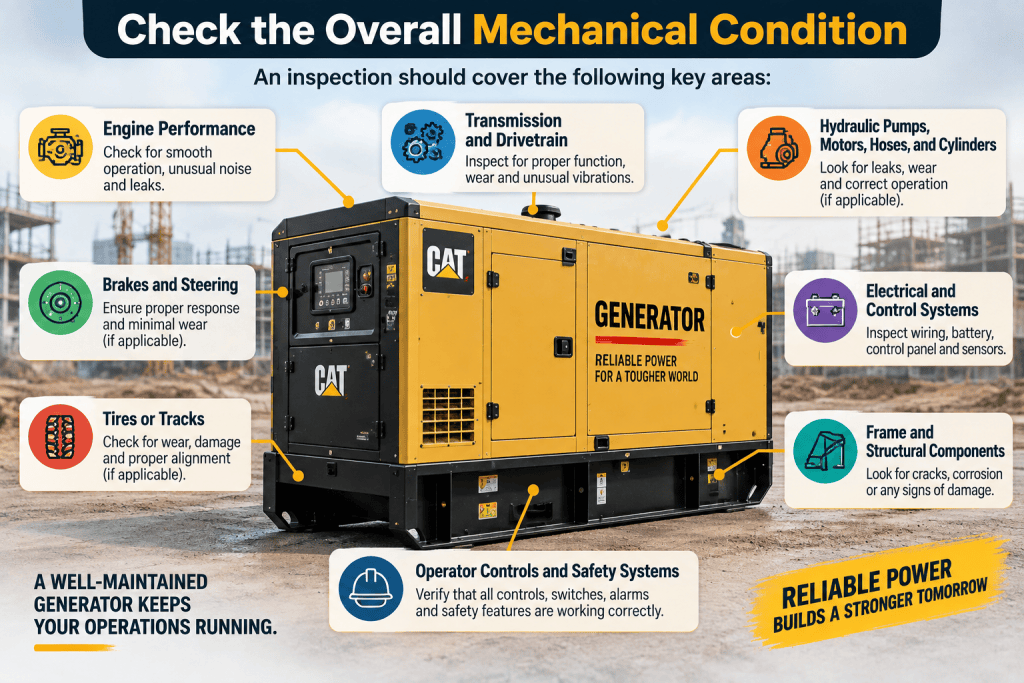
An inspection should cover:
- Engine performance
- Transmission and drivetrain
- Hydraulic pumps, motors, hoses, and cylinders
- Brakes and steering
- Electrical and control systems
- Tires or tracks
- Frame and structural components
- Operator controls and safety systems
Find the Root Cause
Engineers should identify why the failure occurred. Replacing a failed component without correcting the cause can lead to another failure. A hydraulic pump, for example, may fail because of contaminated fluid, overheating, poor filtration, or excessive pressure.
Root-cause diagnosis helps determine whether the repair will provide a lasting solution.
8 Factors Engineers Should Consider
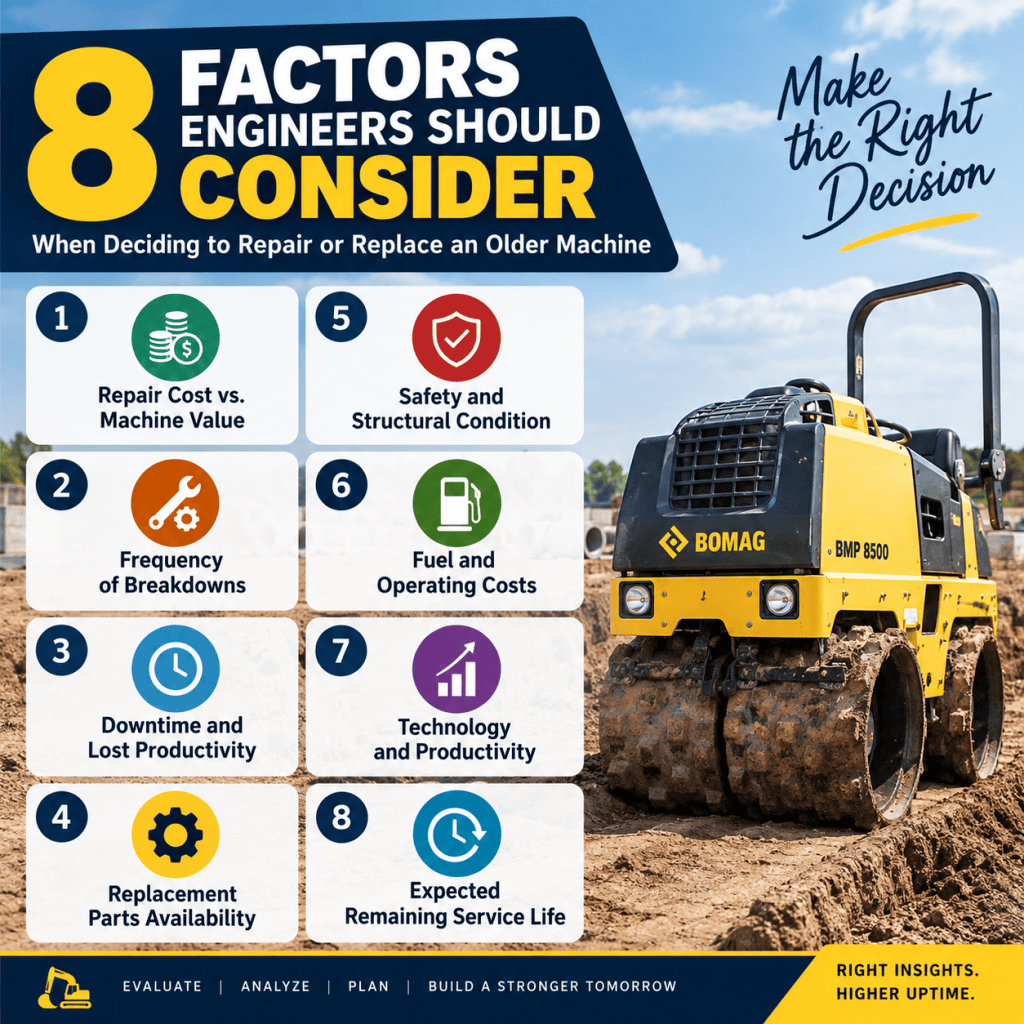
1. Repair Cost vs. Machine Value
Compare the estimated repair cost with the machine’s current value, but avoid relying on a simple percentage rule. A major repair can still be worthwhile if it provides several more years of reliable service.
A useful measure is:
Repair Cost ÷ Expected Additional Service Life
A $10,000 repair that provides three dependable years has a different value from the same repair on a machine likely to need another major overhaul within six months.
2. Frequency of Breakdowns
Review the repair history and ask:
- How often has the machine failed?
- Are failures becoming more frequent?
- Are the same components failing repeatedly?
- How much was spent on repairs during the past year?
- How long was the machine unavailable?
One major failure does not automatically mean replacement. A pattern of repeated failures is more significant.
3. Downtime and Lost Productivity
Downtime is often overlooked. A failed machine can require rental equipment, idle labor, equipment transfers, or project delays.
For example, a $5,000 repair may look affordable, but if the machine remains unavailable for two weeks, the business impact can be much higher. Include both repair and downtime costs.
4. Replacement Parts Availability
Older machines may have discontinued hydraulic components, electronic controllers, sensors, engine parts, or transmission components. Long lead times can create extended downtime.
Check whether critical parts remain supported by the manufacturer or are available through reliable suppliers.
5. Safety and Structural Condition
Safety should be evaluated separately from financial calculations. Inspect:
- Brakes and steering
- Frame and welds
- Hydraulic leaks
- Guards
- Operator controls
- Emergency systems
- Other safety-critical components
A machine should not remain in service simply because repairing it appears cheaper if it cannot be restored to an acceptable operating condition.
6. Fuel and Operating Costs
Older equipment may consume more fuel as engines and components wear. Compare fuel, maintenance, repair, and downtime costs with the expected costs of replacement.
For equipment used thousands of hours each year, even a modest difference in fuel consumption can become significant.
7. Technology and Productivity
New equipment may provide improved diagnostics, monitoring, operator controls, automation, efficiency, or productivity.
However, newer technology does not automatically justify replacement. Ask whether the technology addresses a real operational need. If a new machine can complete work faster or reduce labor requirements, include those benefits in the financial analysis.
8. Expected Remaining Service Life
Estimate how much useful life remains. Look at the engine, transmission, hydraulics, frame, and maintenance history rather than focusing only on the current failure.
When Repairing an Older Machine Makes Sense

Repair can be practical when the core machine remains strong. It may make sense when:
- The failure is isolated.
- The frame and major systems are sound.
- Parts are available.
- Repair costs are manageable.
- Downtime is acceptable.
- The machine still meets project requirements.
- Maintenance records show consistent care.
- The repair can provide meaningful additional service life.
Repairing a reliable older machine can also avoid unnecessary capital expenditure and keep familiar equipment in operation.
When Replacement May Make More Sense

Replacement deserves consideration when repair becomes a recurring operating expense rather than an occasional maintenance requirement.
Repeated major failures involving the engine, transmission, hydraulic system, drivetrain, or electrical system can indicate broader deterioration. Rising repair expenses, excessive downtime, obsolete parts, poor productivity, and unresolved safety concerns are additional warning signs.
Calculate the Total Cost of Keeping an Old Machine
A repair invoice does not represent the full ownership cost. Engineers should consider:
Repair Costs + Preventive Maintenance + Fuel + Downtime + Rental Costs + Productivity Losses
Then compare these costs with:
Replacement Cost + Financing/Ownership Costs + Maintenance + Operating Costs
This broader calculation is especially important for construction equipment repair decisions involving heavily used machines.
Repair vs. Replace Comparison

| Cost Factor | Older Machine | Replacement Machine |
| Initial expenditure | Usually lower | Usually higher |
| Major repair risk | Can increase with age | Generally lower initially |
| Maintenance | May increase | Often more predictable |
| Fuel consumption | May be higher | May be lower |
| Parts availability | Can become limited | Generally easier |
| Downtime risk | Potentially higher | Potentially lower initially |
| Technology | Existing | Newer features may be available |
| Productivity | Existing capability | May improve |
| Remaining service life | Depends on condition | Starts a new service period |
Example: How an Engineer Should Evaluate an Older Machine
Consider a 12-year-old construction machine with a major hydraulic problem and an $8,000 repair estimate.
Step 1: Inspect Other Systems
Check the engine, transmission, frame, electrical system, hydraulic cylinders, hoses, brakes, and controls.
Step 2: Review Maintenance History
Determine whether this is an isolated failure or part of a recurring pattern.
Step 3: Estimate Remaining Life
If the machine could provide another three to five years of dependable service after repair, the repair may have considerable value.
Step 4: Calculate Downtime
Determine rental costs, lost production, idle labor, and possible project delays.
Step 5: Check Parts Availability
Make sure replacement parts can be sourced reliably and within an acceptable timeframe.
Step 6: Compare Replacement Costs
Evaluate purchase price, financing, delivery, maintenance, fuel, and expected productivity.
This shows why Repair vs replace construction equipment is a lifecycle decision rather than an age-based decision.
Call TexPro Equipment Inc. for repair or replacement
Questions Engineers Should Ask
Before approving a major repair, ask:
- What caused the failure?
- Is this an isolated problem?
- What will the complete repair cost?
- What other components show significant wear?
- How much downtime will the repair require?
- Are replacement parts available?
- How many productive hours can reasonably be expected after repair?
- Does the machine meet current safety requirements?
- What are its annual fuel and maintenance costs?
- What would a suitable replacement cost over the same operating period?
Preventive Maintenance and Equipment Life

Regular maintenance can control wear and identify problems before they become major failures. Important activities include scheduled engine service, hydraulic fluid and filter replacement, cooling-system inspection, electrical checks, lubrication, wear-part inspection, hose and belt replacement, fastener checks, brake and steering inspections, condition monitoring, and accurate documentation.
Good maintenance records make future decisions easier because engineers can review operating hours, repair history, recurring failures, and maintenance expenses.
Shop Repair vs. Field Repair
The repair location can also affect downtime and cost.
Field Repair
Field service can be useful when:
- The machine cannot easily be transported.
- The problem can be solved on-site.
- Production needs to resume quickly.
- Transportation would add significant cost.
Shop Repair
Shop repair may be more appropriate when:
- Major components require rebuilding.
- Specialized diagnostic equipment is needed.
- Extensive disassembly is required.
- Detailed post-repair testing is necessary.
For older machines, select the repair location based on the failure, equipment condition, transportation requirements, and expected downtime..
Repair or Replace Checklist
Repair When:
- Major systems are in good condition.
- The failure is isolated.
- Parts are available.
- Repair costs are manageable.
- Downtime is acceptable.
- Safety requirements can be met.
- Meaningful service life remains.
Consider Replacement When:
- Multiple major systems are failing.
- Repair costs continue to rise.
- Breakdowns are frequent.
- Critical parts are obsolete.
- Downtime is affecting projects.
- Operating costs are excessive.
- Productivity is inadequate.
- Safety requirements cannot be reliably met.
Conclusion
The decision between repair and replacement should not be based solely on machine age. Engineers need to evaluate condition, maintenance history, repair costs, downtime, fuel consumption, safety, parts availability, productivity, and expected service life.
A machine with one major failure may still have years of useful operation ahead of it. Conversely, repeated failures across major systems can make continued investment less practical.
The key question is not simply, “How old is this machine?” Instead, ask, “What will this machine cost to own, repair, maintain, and operate from this point forward, and how much productive value will it provide?”
A structured engineering assessment helps contractors and fleet managers make a data-based lifecycle decision and avoid both unnecessary repairs and premature equipment replacement.
Frequently Asked Questions
1. At what age should construction equipment be replaced?
There is no universal replacement age. Consider operating hours, condition, maintenance history, repair costs, downtime, parts availability, safety, and remaining service life. We have seen some customers who have well maintained their equipment such as 185 air compressors own them for more than 20 years.
2. Is it cheaper to repair or replace construction equipment?
Repair usually requires less immediate investment, but replacement may become practical when repeated failures, downtime, fuel consumption, and maintenance costs increase. A total-cost comparison is more useful than the repair invoice alone.
3. How do I know if an old machine is worth repairing?
Begin with a detailed inspection. If the frame and major systems are sound, parts are available, and the repair can provide meaningful additional service life, repairing may be practical.
4. Should downtime be included in the decision?
Yes. Include rental expenses, idle labor, production losses, and project delays when calculating the real cost of a repair.
5. Does high machine age automatically mean replacement?
No. Age is only one factor. A well-maintained older machine can remain productive, while a younger machine with repeated major failures may require a detailed lifecycle review.


Leave a Reply