
5 Types of Demolition Hammer Chisel Bits and When to Use Them
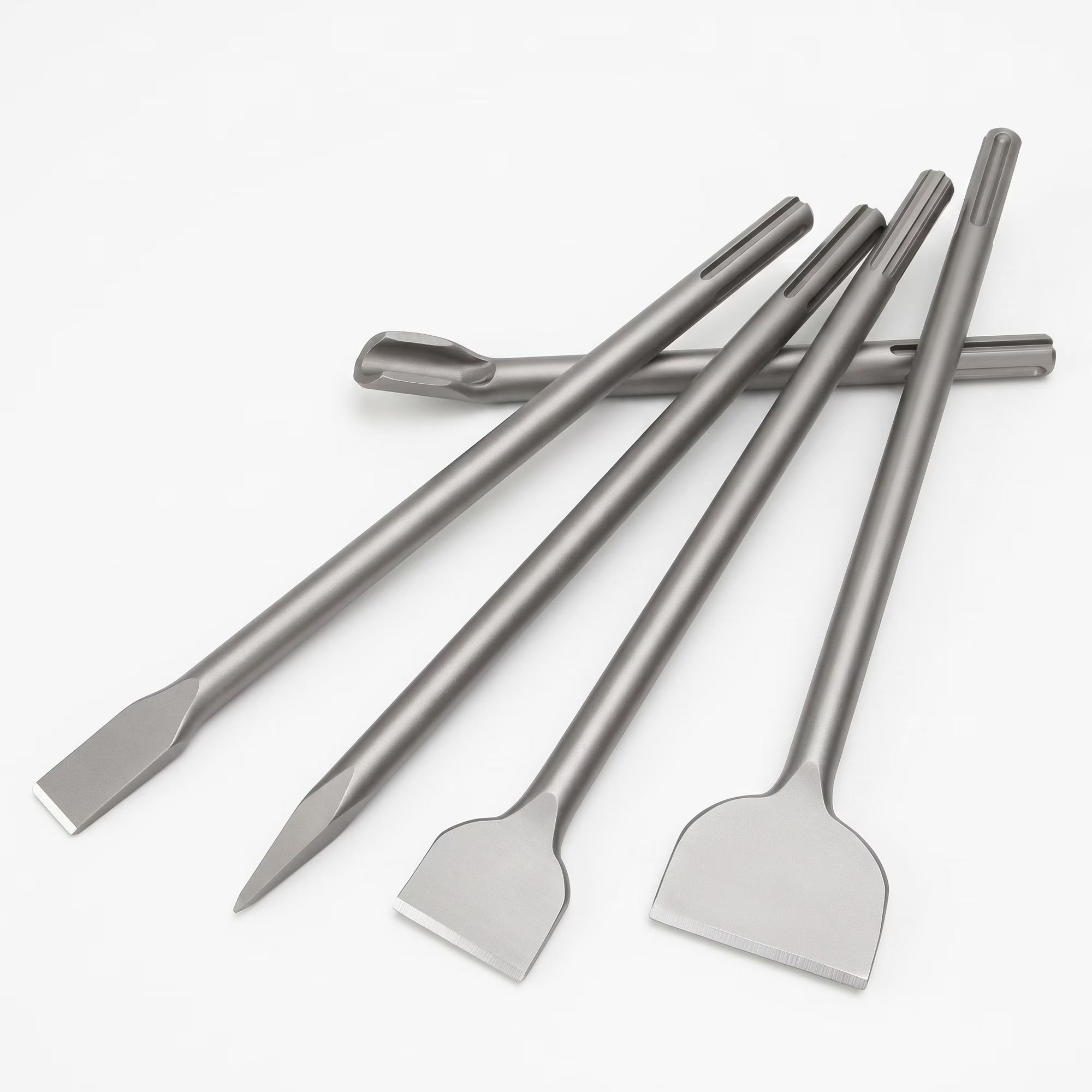
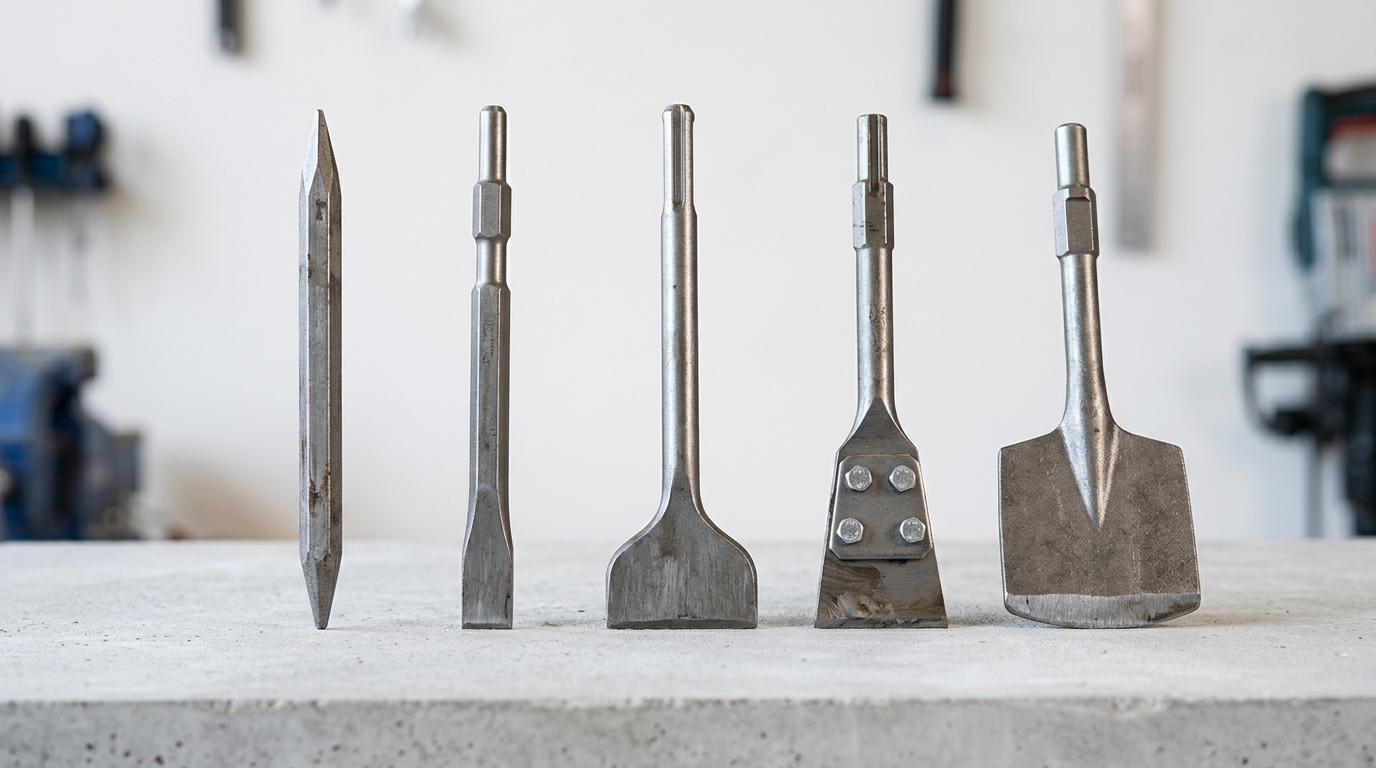
Choosing the right demolition hammer bit can make a significant difference in how quickly and effectively you complete a demolition project. The five common types are pointed chisels, flat chisels, scaling chisels, tile scraper bits, and asphalt cutter bits. Each is designed for a different task, from breaking thick concrete and chipping masonry to removing floor tiles and cutting asphalt.
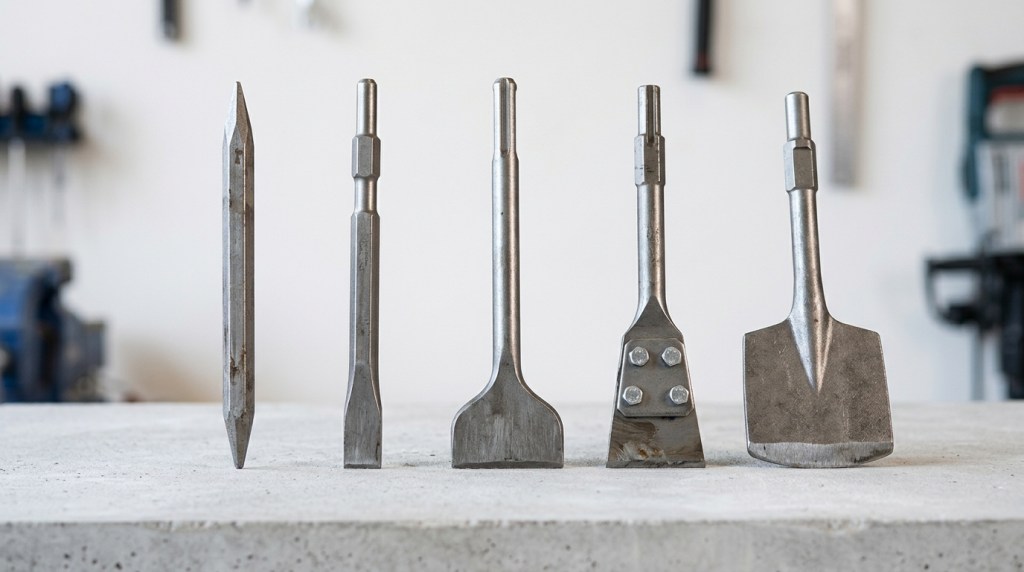
Table of Contents
- 5 Common Types of Demolition Hammer Bits
- Quick Comparison: Which Demolition Hammer Bit Should You Use?
- How to Choose the Right Demolition Hammer Bit
- Final Thoughts
5 Common Types of Demolition Hammer Bits and When to Use Them
Not all demolition hammer bits are designed for the same purpose. Below are five common types and the applications where each one works best.
1. Pointed Chisel Bit (Bull Point)

The pointed chisel bit, also known as a bull point, is one of the most recognizable demolition hammer attachments. It features a narrow, pointed tip designed to concentrate the hammer’s impact force into a small area.
This concentrated force helps initiate cracks and break apart hard materials, making it useful for general concrete and masonry demolition.
When Should You Use a Pointed Chisel Bit?
Use a pointed chisel when you need to:
- Break thick concrete or concrete slabs.
- Start cracks in concrete surfaces.
- Break apart brick and masonry.
- Perform general demolition in confined areas.
- Break up hard materials before removing larger sections.
Why Choose a Pointed Chisel?
The pointed tip directs impact force into a concentrated area, helping create an initial fracture in hard materials. Once the material begins to crack, you can continue breaking it into smaller pieces.
Best for: Starting cracks and breaking concrete, masonry, and other suitable hard materials.
2. Flat Chisel Bit

A flat chisel bit has a straight, flattened cutting edge rather than a pointed tip. Its wider working surface helps break away material along a line, making it suitable for controlled chipping and general demolition.
Compared with a pointed chisel, a flat chisel distributes impact across a broader contact area.
When Should You Use a Flat Chisel Bit?
A flat chisel is useful for:
- Breaking away large pieces of concrete.
- Chipping concrete surfaces.
- Removing excess mortar.
- Creating channels in masonry.
- Trimming and removing unwanted material.
Why Choose a Flat Chisel?
The flat cutting edge provides better control when removing material along a particular line or surface. It is a versatile attachment for contractors who regularly perform concrete and masonry work.
Best for: General concrete chipping, masonry work, and controlled material removal.
3. Scaling Chisel Bit
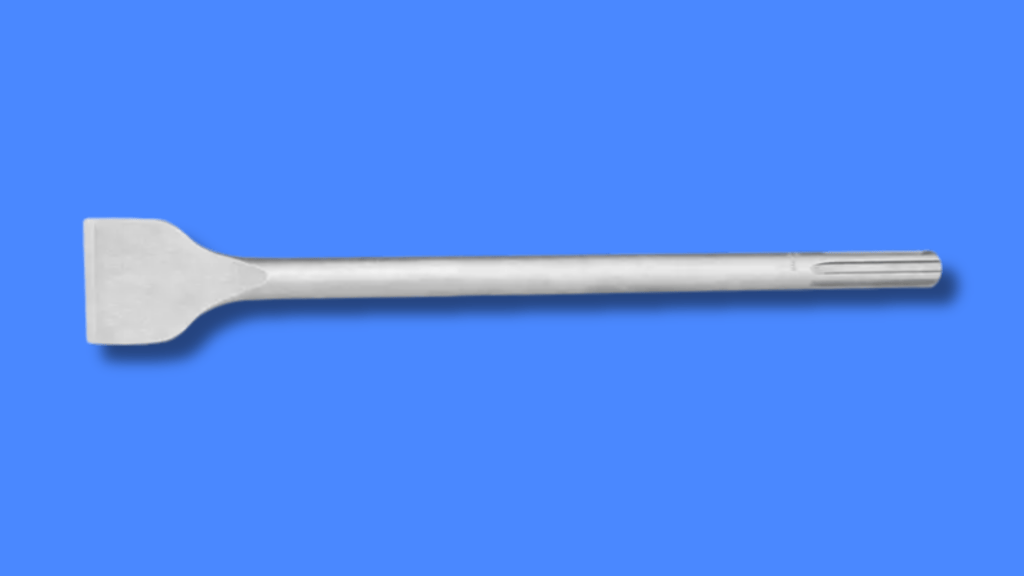
A scaling chisel bit features a wider blade designed to remove material across a larger surface area. It is particularly useful for surface preparation and removing unwanted layers or deposits.
Compared with a standard flat chisel, a scaling chisel typically has a broader working edge, allowing it to cover more surface area during operation.
When Should You Use a Scaling Chisel Bit?
Use a scaling chisel when you need to:
- Remove dried concrete splatter.
- Chip away surface deposits.
- Remove scale from concrete or other suitable surfaces.
- Prepare surfaces for additional construction work.
- Remove unwanted surface material across a wider area.
Why Choose a Scaling Chisel?
Its wide blade makes it useful for surface-level removal where a pointed bit would concentrate too much force in one small location.
Best for: Surface cleaning, removing concrete buildup, and scaling applications.
4. Tile Scraper Bit

A tile scraper bit is designed to remove flooring materials and surface coverings. It typically features a broad, flat scraping blade that can slide underneath suitable flooring materials to separate them from the underlying surface.
Unlike pointed and standard flat chisels, which are primarily used for breaking and chipping, a tile scraper is intended for removing layers of flooring more efficiently.
When Should You Use a Tile Scraper Bit?
A tile scraper attachment is useful for:
- Removing old floor tiles.
- Stripping linoleum flooring.
- Removing vinyl flooring.
- Removing certain adhesives and flooring residues.
- Renovation projects that require existing floor coverings to be removed.
Why Choose a Tile Scraper?
Its wide blade helps cover a larger area and get underneath flooring materials, making it useful for renovation and flooring-removal projects.
The correct blade and tool setup depend on the flooring material and how firmly it is attached. Some tiles may require a different removal technique.
Best for: Removing suitable floor coverings, linoleum, and other flooring materials.
5. Asphalt Cutter Bit
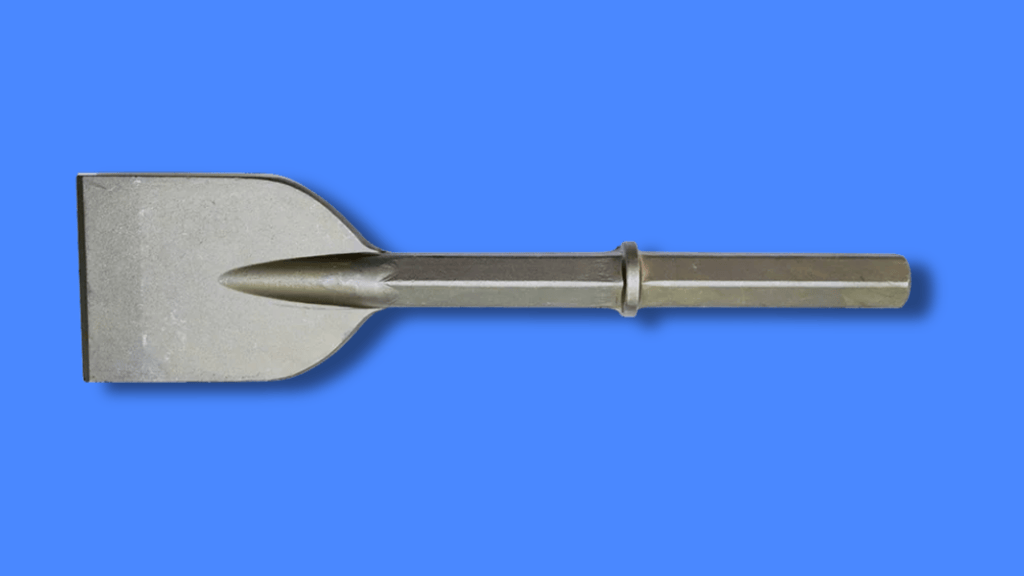
An asphalt cutter bit is a demolition hammer attachment with a wide cutting blade designed for breaking and cutting asphalt surfaces.
It is commonly used in roadwork, pavement repair, and construction projects where sections of asphalt need to be removed.
When Should You Use an Asphalt Cutter Bit?
An asphalt cutter is useful for:
- Cutting and breaking asphalt pavement.
- Removing damaged asphalt sections.
- Supporting road repair and maintenance.
- Opening sections of asphalt for utility work.
- Removing asphalt around construction or repair areas.
Why Choose an Asphalt Cutter?
Its wide blade is designed to work along asphalt surfaces, making it more appropriate for pavement removal than a narrow pointed chisel.
Best for: Asphalt cutting, pavement removal, and road maintenance projects.
Quick Comparison: Which Demolition Hammer Bit Should You Use?
If you’re unsure which attachment is right for your project, use this comparison table to identify the most suitable bit.
| Demolition Hammer Bit | Main Purpose | Recommended Applications |
|---|---|---|
| Pointed Chisel (Bull Point) | Concentrates impact force | Breaking concrete, starting cracks, masonry demolition |
| Flat Chisel | Chipping and cutting along a line | Concrete removal, masonry, channeling |
| Scaling Chisel | Removes material across a wider surface | Concrete splatter, surface deposits, scaling |
| Tile Scraper | Separates flooring materials | Tile, linoleum, and suitable flooring removal |
| Asphalt Cutter | Cuts and breaks pavement | Asphalt removal, road repair, pavement maintenance |
How to Choose the Right Demolition Hammer Bit
Knowing the different bit types is only part of choosing the right attachment. You should also consider the material, the type of demolition work, and whether the bit is compatible with your machine.
Here are four important factors to consider before purchasing a demolition hammer bit.
1. Identify the Material You Need to Remove
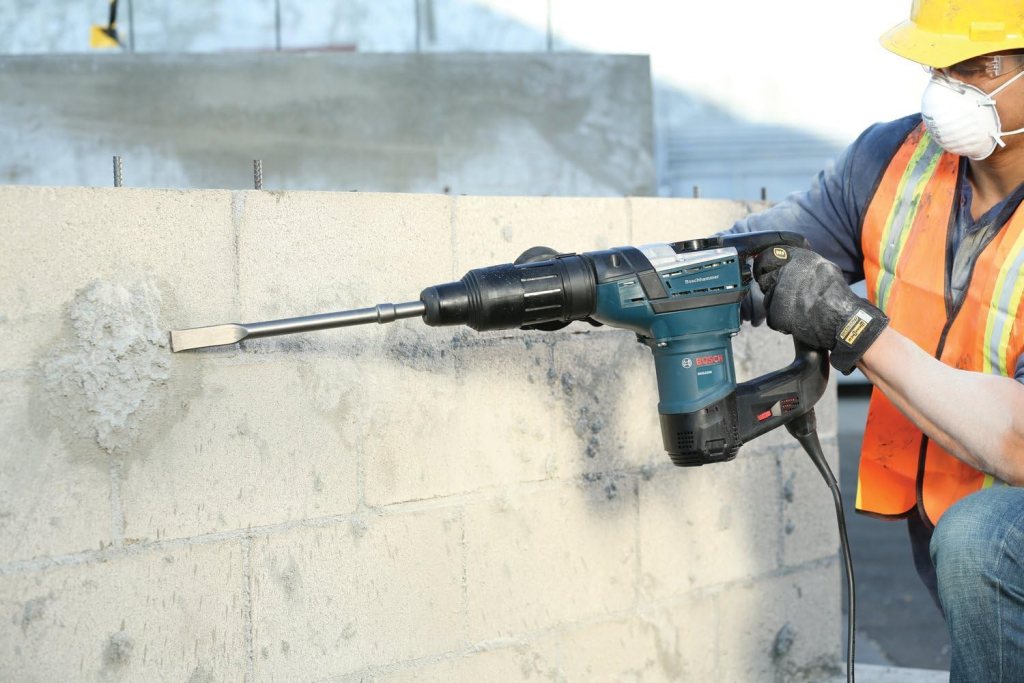
Start by identifying the material involved in your project.
For example:
- Concrete demolition: Pointed or flat chisel.
- Surface preparation: Scaling chisel.
- Flooring removal: Tile scraper.
- Asphalt removal: Asphalt cutter.
Using a bit designed for the material can help make the work more efficient and controlled.
2. Consider the Type of Work
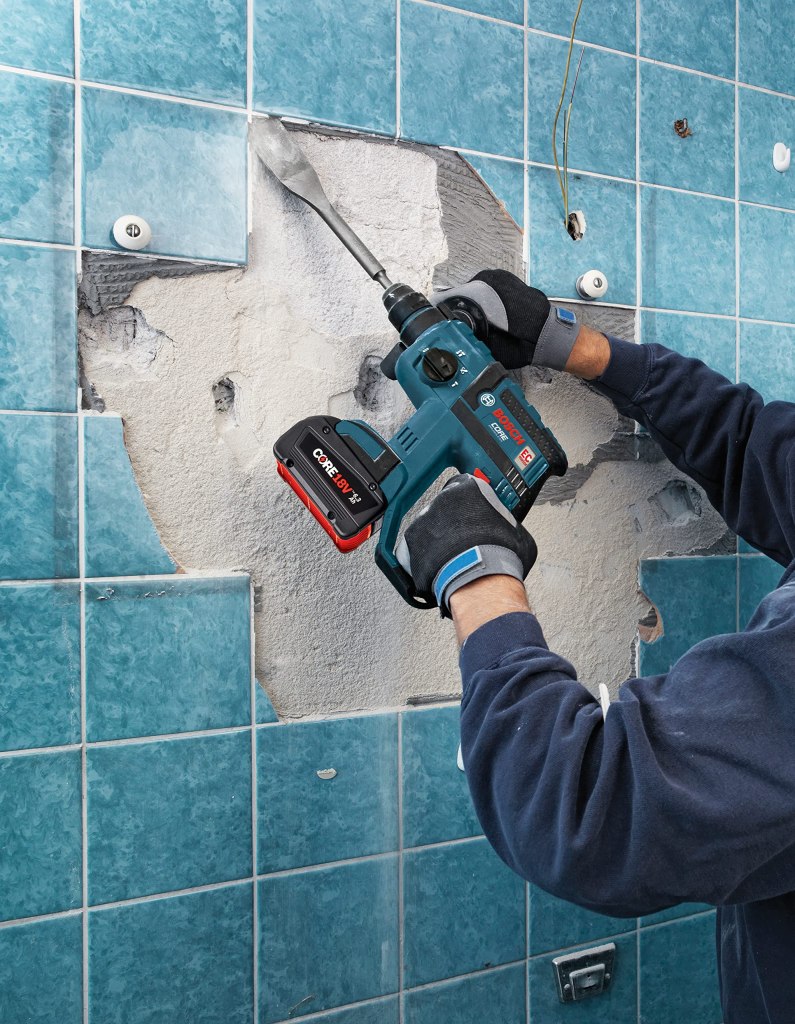
Think about whether you need to break, chip, scrape, or cut the material.
A pointed chisel is suitable for initiating cracks, while a flat chisel is useful for removing material along a line. For broader surface removal, a scaling chisel or scraper may be more appropriate.
3. Check the Shank Compatibility
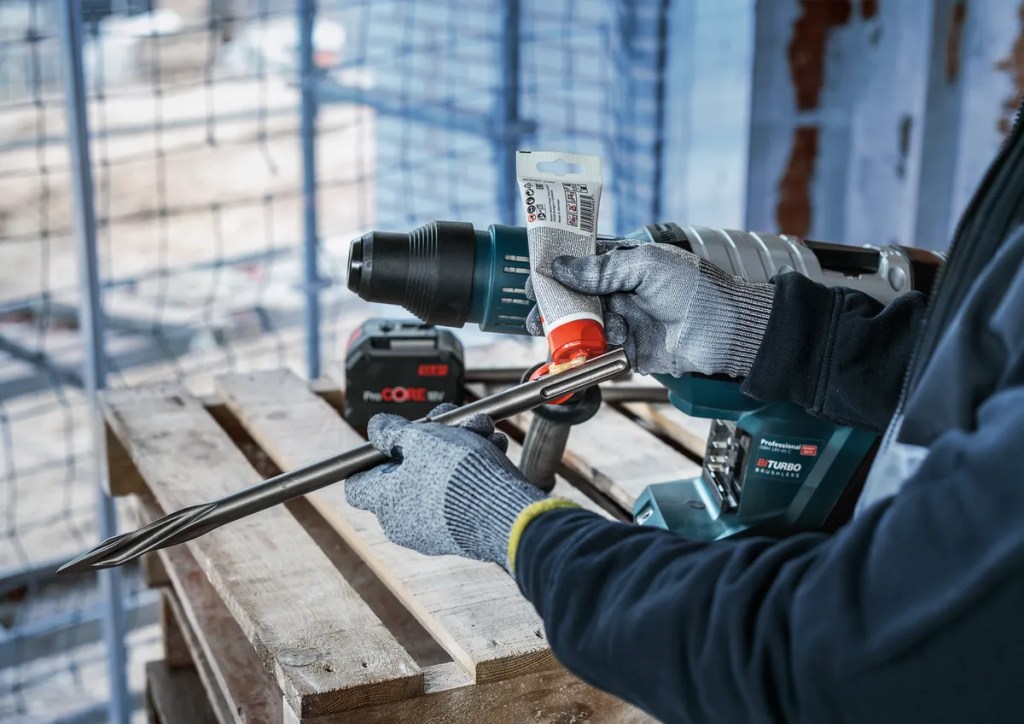
One of the most important things to check before purchasing a demolition hammer bit is its shank type.
The shank is the part of the attachment that connects to the hammer. Common connection systems include:
- SDS-Plus
- SDS-Max
- Hex shank
- Spline shank
These connection types are not universally interchangeable. Always check your demolition hammer’s specifications and confirm that the bit matches the tool’s required connection system.
4. Match the Bit to Your Demolition Hammer
Different demolition hammers are designed for different attachment sizes and impact-energy ranges.
Before purchasing a bit, check:
- The manufacturer’s recommended accessory specifications.
- The required shank size and connection type.
- The tool’s permitted bit dimensions.
- Whether the attachment is approved for your specific hammer model.
Using an incompatible attachment can affect performance and may damage the tool or accessory.
Final Thoughts
Choosing the right demolition hammer bit can make your concrete demolition, renovation, and construction work more efficient. Each attachment has a different purpose, so selecting the right one depends on the material you’re working with and the result you want to achieve.
To summarize:
- Pointed chisel: Best for starting cracks and breaking hard materials.
- Flat chisel: Best for general concrete chipping and controlled material removal.
- Scaling chisel: Best for removing surface deposits and concrete buildup.
- Tile scraper: Best for removing suitable flooring materials.
- Asphalt cutter: Best for cutting and removing asphalt pavement.
Before purchasing, always verify the bit’s shank compatibility and suitability for your demolition hammer model.
If you need assistance with construction equipment, parts, or equipment service in the Dallas-Fort Worth area, contact TexPro Equipment at 817-834-5800 or visit TexPro Equipment.



Leave a Reply