

How to Maintain a Trench Roller: Inspection, Repair, and Testing Guide
The most efficient way to prevent costly downtimes on site is proper maintenance of trench rollers. TexPro Equipment Inc. is known for helping contractors with trench roller inspections, OEM parts replacement, and equipment support. Some of the most common problems we see involve premature wear attributed to unperformed maintenance, dirty hydraulic fluid, and lack of proper lubrication.
Looking for genuine OEM trench roller parts or expert equipment support? TexPro Equipment Inc. proudly serves contractors across Dallas/Fort Worth with reliable equipment, replacement parts, and professional assistance.
Industry Insight: Studies show that poor maintenance strategies can reduce equipment productivity by 5%–20%, making preventive maintenance one of the most cost-effective investments for construction fleets.

Key Takeaways
- Inspect your trench roller before every use.
- Follow a regular maintenance schedule to reduce downtime.
- Check the engine, hydraulics, drums, and lubrication points regularly.
- Replace worn parts with genuine OEM components.
- Perform a final performance test before returning the machine to work.
- Partner with TexPro Equipment Inc. for trusted OEM equipment and parts in Dallas/Fort Worth.
Table of Contents
- Introduction
- What Is a Trench Roller and Where Is It Used?
- Why Routine Maintenance Matters
- Pre-Service Inspection Checklist
- Step-by-Step Maintenance Process
- Common Problems and Diagnostics
- Best Practices for Repairs
- Performance Testing After Maintenance
- Why OEM Parts Make a Difference
- Choosing the Right Equipment and OEM Parts Supplier in Dallas/Fort Worth
- Preventive Maintenance Tips
- Final Words
- Frequently Asked Questions
What Is a Trench Roller and Where Is It Used?

A trench roller is a machine that helps compact soil in tight spaces. It manages to produce a powerful compaction force while being small enough to work in narrow trenches and near underground utilities.
You will find this equipment used in:
• Construction of gas and water pipelines
• Building roads
• Laying foundations
• Creating drainage systems
• Landscaping and site preparation
Correct compaction helps create strong subbases, preventing settlement, erosion, and construction defects.
Why Routine Maintenance Matters?

Like any construction equipment, trench rollers work well when they are serviced on a scheduled basis. However, not carrying out regular inspections may save time in the moment, but can lead to unexpected breakdowns down the road.
There are advantages to routine maintenance, including the following:
• Creates a reliable machine
• Fewer instances of unexpected breakdowns
• Longevity in equipment
• Improvement in fuel consumption
• Keeping the machine safe to use
• Cutting the long-term costs of operation
Expert Tip from TexPro Equipment Inc.
Our equipment specialists recommend inspecting hydraulic hoses, vibration components, and lubrication points before every workday. These simple checks often prevent the most common causes of trench roller downtime and help extend equipment service life.
Pre-Service Inspection Checklist
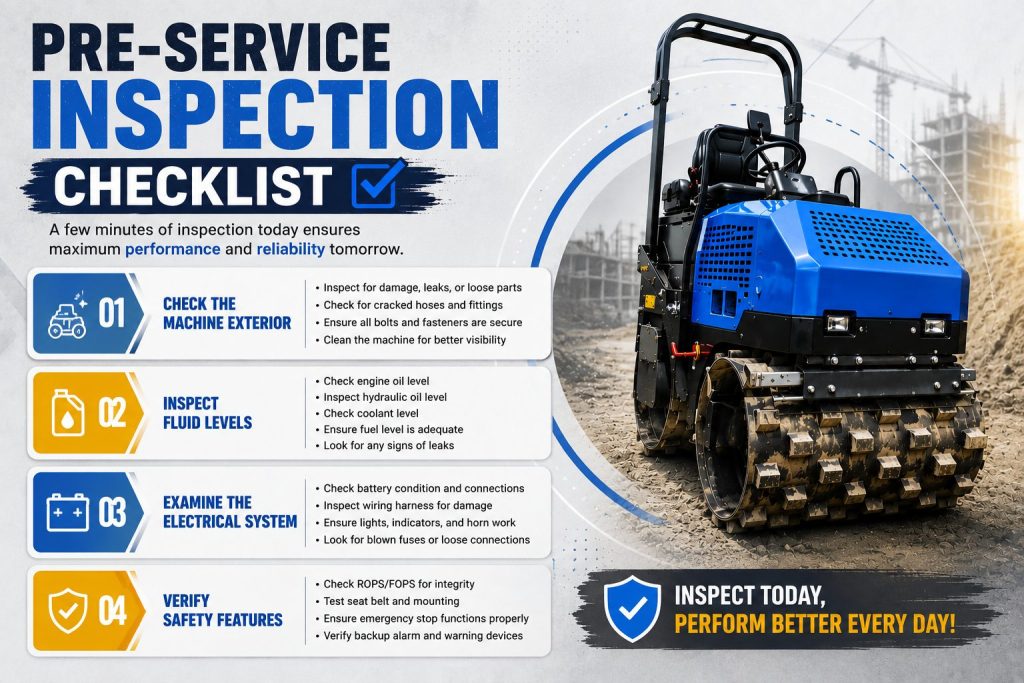
Before beginning any maintenance work, perform a complete visual and operational inspection.
Check the Machine Exterior
Walk around the equipment and inspect the frame, drums, scrapers, and protective covers. Look for dents, loose bolts, cracked welds, or damaged guards. Pay close attention to excessive dirt buildup around moving parts, as debris can accelerate wear.
Inspect Fluid Levels
Verify that all fluids are at the recommended levels.
Check:
- Engine oil
- Hydraulic oil
- Coolant
- Fuel system
Any visible leaks should be addressed before operating the machine.
Examine the Electrical System
Inspect the battery terminals, wiring harnesses, connectors, switches, and indicator lights. Loose electrical connections often cause starting problems and inconsistent machine performance.
Verify Safety Features
Test the emergency stop, operator controls, warning lights, and safety guards. These components are essential for protecting operators and maintaining safe job site practices.
Step-by-Step Maintenance Process
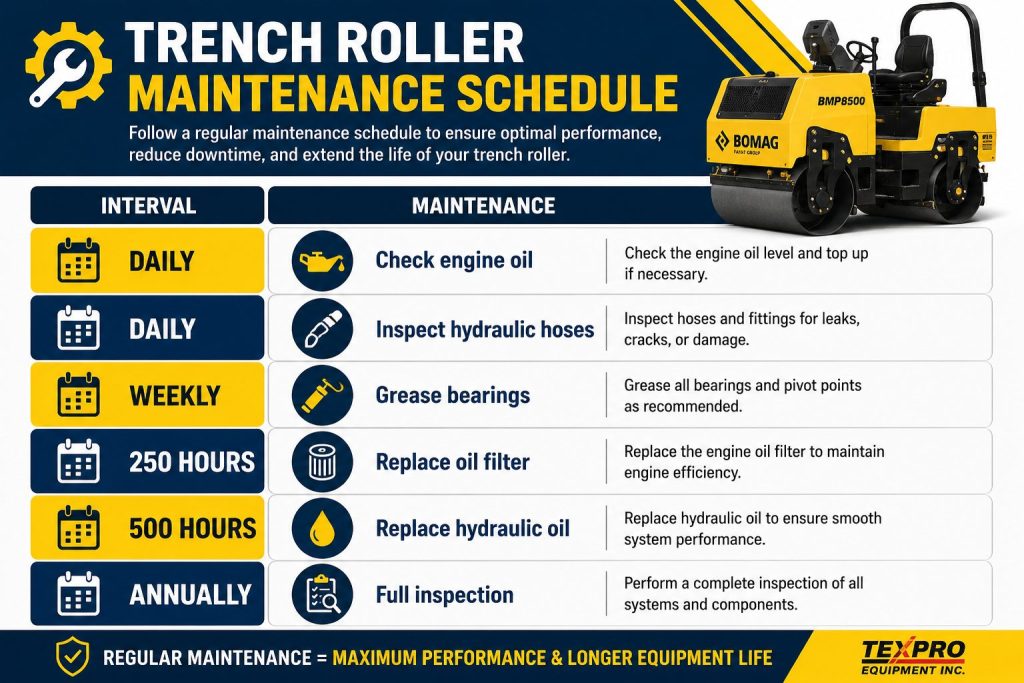
A structured maintenance routine keeps every major system operating efficiently.
| Step | Maintenance Task | Process |
| Step 1 | Engine Maintenance | Change the engine oil, replace the oil and fuel filters, and inspect the air filter. |
| Step 2 | Hydraulic System Maintenance | Check hydraulic hoses, fittings, and seals, and replace contaminated hydraulic fluid if needed. |
| Step 3 | Drum & Vibration System | Inspect the drums, clean debris, and ensure the vibration system operates properly. |
| Step 4 | Lubrication | Grease all recommended bearings, pivot joints, and moving parts to reduce wear. |
Common Problems and Diagnostics
Even well-maintained equipment can develop issues over time. Recognizing early warning signs helps prevent more extensive damage.
| Problem | Possible Cause | Recommended Action |
| Poor compaction | Weak vibration system | Inspect the exciter mechanism and vibration components |
| Hydraulic oil leak | Damaged hose or seal | Replace affected parts immediately |
| Engine won’t start | Weak battery or electrical issue | Check battery, wiring, and connections |
| Excessive vibration | Loose mounting hardware | Tighten or replace worn fasteners |
| Engine overheating | Blocked cooling system | Clean the radiator and inspect the coolant level |
Browse our premium trench rollers, including the Wacker Neuson RTD-SC4, RTLX-SC3, RT82-SC2, RT56- SC, BOMAG BM 8500, Husqvarna LP 9505, and other reliable models from Dynapac and Doosan. Call us now!
Best Practices for Repairs

Address worn or damaged components as soon as they’re identified. Delaying repairs often causes additional wear on connected systems and increases repair costs.
When performing trench roller repair, always follow the manufacturer’s service recommendations and replace damaged components with quality replacement parts that meet equipment specifications. Keeping detailed maintenance records also helps track recurring issues and supports better maintenance planning.
Performance Testing After Maintenance

Once servicing is complete, it’s important to verify that the machine performs correctly before returning it to the job site.
Begin by starting the engine and allowing it to reach normal operating temperature. Listen for unusual noises and confirm smooth throttle response.
Next, operate the hydraulic controls and inspect for leaks while the system is under pressure.
Run the vibration system and confirm that both drums deliver consistent performance without excessive movement or abnormal sounds.
Finally, perform a complete operational check in a safe area to ensure steering, controls, braking systems, and safety features function as expected.
Why OEM Parts Make a Difference?

Using genuine OEM parts is essential for maintaining the performance, safety, and reliability of your trench roller. Unlike low-cost alternatives, OEM components are designed for the correct fit and dependable operation, helping reduce premature wear, unexpected breakdowns, and costly downtime. Investing in quality replacement parts keeps your equipment running efficiently and your projects on schedule.
Explore our complete range of construction equipment built for demanding job sites.
Choosing the Right Equipment and OEM Parts Supplier in Dallas/Fort Worth

Finding a reliable supplier is just as important as following a regular maintenance schedule. For businesses across the Dallas/Fort Worth area, TexPro Equipment Inc. is an Original Equipment Supplier serving the construction industry with quality-Assured equipment and OEM parts. The company supplies equipment from leading manufacturers, including Bomag, Husqvarna, Dynapac, and Doosan, helping contractors find the right solutions for compaction, construction, demolition, and earthmoving projects.
Working with an experienced supplier also means receiving product guidance, faster access to replacement components, and dependable after-sales support. Whether you’re planning scheduled maintenance or looking for how to service a trench roller, having the right supplier can make the process faster and more efficient.
Preventive Maintenance Tips

Preventive maintenance doesn’t require complicated procedures. Small routine checks can significantly improve equipment performance over time.
Here are a few simple practices to follow:
- Clean the machine after every workday to remove dirt and compacted soil.
- Check engine oil, hydraulic fluid, and coolant before starting work.
- Inspect hoses and fittings for leaks or visible damage.
- Tighten loose nuts, bolts, and fasteners during routine inspections.
- Lubricate all recommended grease points according to the maintenance schedule.
- Replace air, fuel, and oil filters at the recommended service intervals.
Final Words
Regular maintenance helps keep your trench roller running safely, efficiently, and with less downtime. Following a consistent service schedule and using genuine OEM parts can improve performance and extend equipment life. Contractors in the Dallas/Fort Worth area can count on TexPro Equipment Inc. for quality equipment, genuine replacement parts, and reliable support to keep their projects moving.
Frequently Asked Questions
1. How often should a trench roller be serviced?
Service it according to the manufacturer’s operating-hour schedule, with daily inspections and regular fluid checks.
2. What are the signs that a trench roller needs maintenance?
Hydraulic leaks, unusual vibration, excessive noise, and starting issues indicate maintenance is needed.
3. Why are OEM parts better than aftermarket parts?
OEM parts provide the correct fit and longer service life while reducing the risk of equipment failure.
4. What should be inspected before operating a trench roller?
Check engine oil, hydraulic fluid, coolant, drums and safety controls, and inspect for leaks or visible damage.
5. Where can contractors in Dallas/Fort Worth purchase genuine OEM equipment and parts?
Contractors can purchase genuine OEM equipment and parts from TexPro Equipment Inc., serving the Dallas/Fort Worth area.
Keep Your Trench Roller Running Strong!
Contact us today at 817-834-5800, request a quote or speak with our equipment specialists.


Leave a Reply