

How Can OEM Parts Improve Equipment Reliability for Dallas–Fort Worth Contractors?
Keeping your heavy equipment running is essential to staying on schedule and avoiding costly delays. Imagine arriving at a Dallas–Fort Worth job site with your crew ready for a concrete pour, only to have your skid steer fail to start or your excavator lose hydraulic pressure. Suddenly, work stops, labor costs increase, and project deadlines are pushed back.
Recent studies from Siemens’ 2024 True Cost of Downtime research indicate that equipment failure is due to unplanned downtime. Therefore, using genuine OEM parts that are designed to meet original factory specifications helps reduce unexpected breakdowns by providing an exact fit, reliable performance, protecting equipment performance, helping contractors minimize downtime and improving long-term profitability.
In this guide, you will learn how OEM parts enhance equipment reliability and why they are a smart investment for Dallas–Fort Worth contractors.
Key Takeaways
- OEM parts ensure an exact fit and reliable performance.
- Genuine parts help reduce downtime and costly delays.
- High-quality materials extend equipment lifespan.
- OEM parts help protect manufacturer warranties.
- Trusted suppliers provide fast, accurate parts support.
- Preventive maintenance with OEM parts improves equipment reliability and lowers long-term costs.
Table of Contents
- What Are OEM Parts?
- OEM Parts vs. Aftermarket Parts
- Why Should I Use Original Equipment Manufacturer (OEM) Parts?
- How OEM Parts Improve Equipment Reliability
- Why Dallas–Fort Worth Contractors Choose Genuine Replacement Parts
- Choosing the Right Original Equipment Supplier
- How OEM Manufacturing Companies Ensure Quality
- Maintenance Tips to Maximize Equipment Life
- Key Takeaways
- Frequently Asked Questions
- Conclusion
What Are OEM Components?
Before picking replacement parts, you should know the definition of OEMs. An OEM (original equipment manufacturer) is a manufacturer of the original components used in manufacturing equipment, such as machines.
The components are constructed using the same manufacturing criteria, material, and quality as the original component. Unlike generic competitors, OEM parts are made to fit perfectly with the machine, which helps to keep the machine’s performance at its designed level.
OEM Parts vs. Aftermarket Parts

Contractors often compare genuine components with aftermarket replacements. Although aftermarket parts may have a lower purchase price, they don’t always provide the same level of quality or compatibility.
| Feature | OEM Parts | Aftermarket Parts |
| Precision Fit | Built to exact factory specifications for a perfect fit | May require modifications or adjustments during installation |
| Quality Standards | Tested and approved by the original equipment manufacturer | Quality varies depending on the manufacturer and supplier |
| Warranty Compatibility | Typically supported under the manufacturer’s warranty | May affect warranty coverage in some cases |
| Equipment Performance | Delivers reliable, consistent performance | Performance can vary based on part quality |
| Service Life | Generally lasts longer due to higher manufacturing standards | Often has a shorter lifespan, depending on the product quality |
Choosing genuine components minimizes compatibility issues and helps reduce unexpected downtime.
Why Should I Use Original Equipment Manufacturer (OEM) Parts?
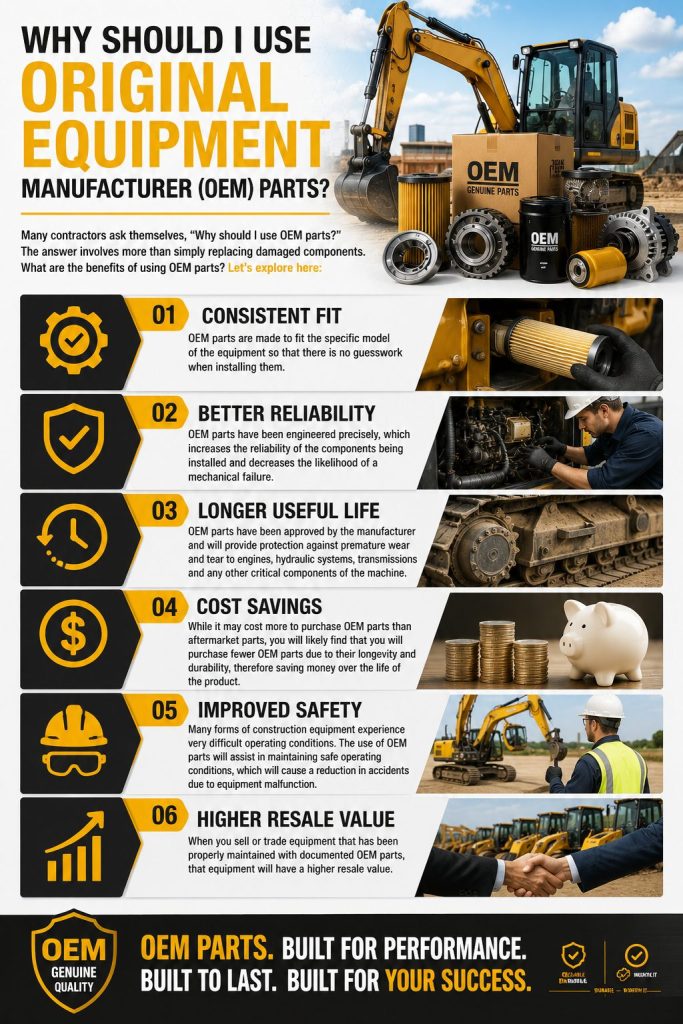
Many contractors ask themselves, “Why should I use OEM parts?” The answer involves more than simply replacing damaged components. What are the benefits of using OEM parts? Let’s explore here:
Consistent Fit
OEM parts are designed to fit the specific model of the equipment, so there is no guesswork when installing them.
Better Reliability
OEM parts are engineered precisely, increasing the reliability of the components installed and reducing the likelihood of mechanical failure.
Longer Useful Life
OEM parts have been approved by the manufacturer and will provide protection against premature wear and tear to engines, hydraulic systems, transmissions and any other critical components of the machine.
Cost Savings
While it may cost more to purchase OEM parts than aftermarket parts, you will likely find that you will purchase fewer OEM parts due to their longevity and durability, therefore saving money over the life of the product.
Improved Safety
Many forms of construction equipment experience very difficult operating conditions. The use of OEM parts will assist in maintaining safe operating conditions, which will cause a reduction in accidents due to equipment malfunction.
Higher Resale Value
When you sell or trade equipment that has been properly maintained with documented OEM parts, that equipment will have a higher resale value.
How OEM Components Enhance Reliability in Equipment?
Reliable equipment allows for projects to be completed on time and reduces the chance of costly delays. Genuine replacement components are a major contributor to the reliable performance of the equipment.
Reduction of Unexpected Downtime
Equipment failures most often occur during the most inconvenient times. Because OEM components are manufactured to specific tolerances, there is a decrease in the risk of premature failures, keeping the project running smoothly.
Maintenance of Peak Performance
Hydraulic systems, engines, electrical items and transmissions will operate at their highest capacity when all parts are functioning in concert with their design, ensuring all components function as intended.
Protection of Other Components
By using replacement parts that do not fit properly, adjacent systems will experience an increase in stress. Using OEM Components will reduce premature wear, ultimately increasing the useful life of costly components as well as other components in the assembly.
Better Fuel Economy
When filters, injectors, sensors and engine components operate properly, they reduce the amount of fuel consumed without losing performance from a machine.
Lower Total Cost of Ownership
While OEM components may have a higher purchase cost upfront, over time, they have a lower cost of ownership due to fewer breakdowns, reduced labour costs, and increased overall service life.
Why do Dallas–Fort Worth Contractors Choose Genuine Replacement Parts?

North Texas is known for its heavy construction activity and the challenges contractors deal with in using equipment. In the summertime, contractors face the extreme heat, Dusty job sites, and extended operating hours, requiring parts to perform under these extreme conditions.
Contractors in Dallas/Fort Worth can keep their equipment running smoothly and reduce the amount of time they experience equipment downtime by using OEM-heavy-duty replacement parts. Additionally, by having access to genuine parts inventory locally, repairs can be completed rapidly, enabling projects to continue with a minimum amount of disruption.
The research says, “ A peer-reviewed 2024 study published in Service Science found that OEMs that consider spare parts reliability and logistics during equipment design can reduce lifecycle costs by minimizing repair delays, inventory shortages, and equipment downtime throughout the machine’s operating life.
Choosing the Right Original Equipment Supplier
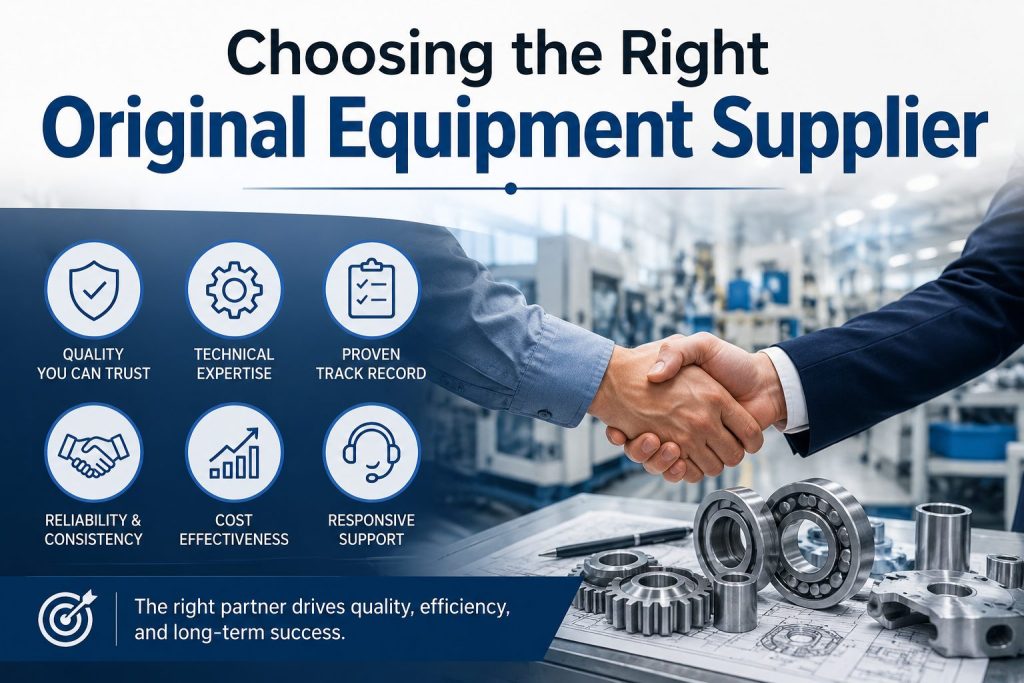
Selecting a reliable Original Equipment Supplier is just as important as choosing the right replacement part.
A trusted supplier like TexPro Equipment Inc., dba EQUIPRO, offers:
- Genuine OEM inventory from a reputable manufacturer
- Experienced parts professionals
- Fast access to parts
- Verification of the compatibility of parts with the equipment
- Warranty support
- Technical support after the sale and experienced service personnel trained by the manufacturer.
Working with knowledgeable professionals ensures you receive the correct component the first time, helping avoid costly installation mistakes.
How do OEM Manufacturing Companies Ensure Quality?

TexPro Equipment Inc., dba EQUIPRO, a leading construction equipment dealership and authorized service center partner with 30 leading OEM manufacturing companies, invest heavily in engineering, research, and quality control. Every component undergoes extensive testing before reaching customers.
Quality assurance often includes:
- Precision manufacturing
- Material testing
- Performance validation
- Durability testing
- Strict production standards
- Continuous product improvements
These rigorous processes help ensure every replacement component performs consistently under demanding job site conditions.
Maintenance Tips to Maximize Equipment Life
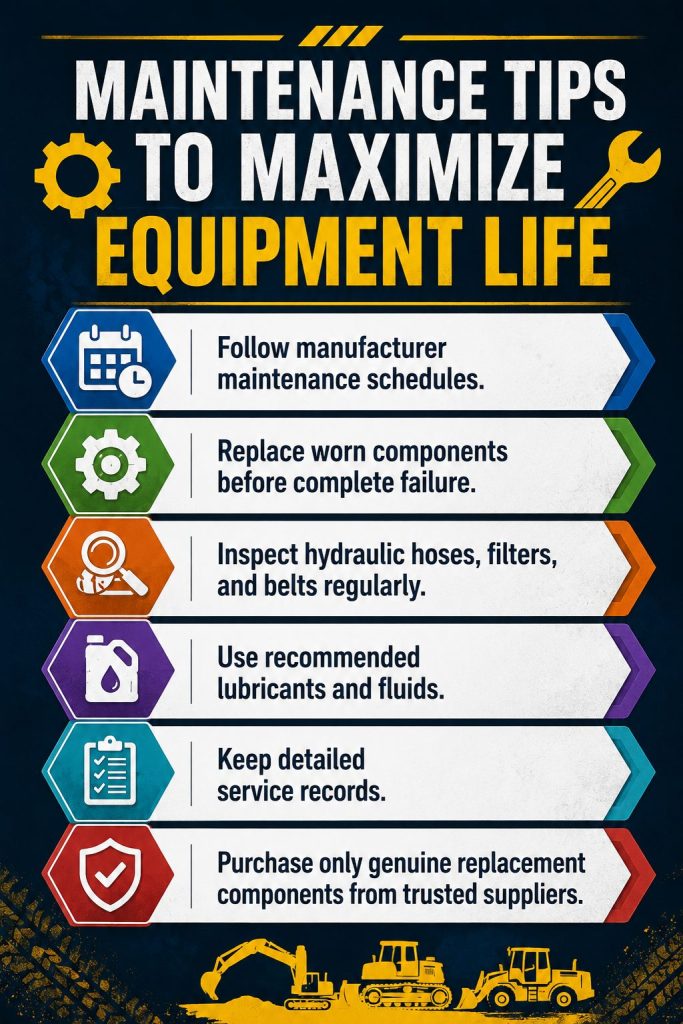
Even the highest-quality replacement components perform best when combined with proper maintenance practices.
Contractors should:
- Follow the manufacturer’s maintenance schedules.
- Replace worn components before complete failure.
- Inspect hydraulic hoses, filters, and belts regularly.
- Use recommended lubricants and fluids.
- Keep detailed service records.
- Purchase only genuine replacement components from trusted suppliers.
Preventive maintenance helps reduce emergency repairs while maximizing equipment productivity.
Final Thoughts
Reliable equipment is essential for completing construction projects safely, efficiently, and on schedule. Investing in OEM parts helps contractors reduce unexpected breakdowns, improve machine performance, extend equipment life, and lower long-term operating costs. Genuine replacement components are engineered to meet exact factory specifications, making them a dependable choice for maintaining heavy equipment in demanding working conditions.
For contractors throughout Dallas–Fort Worth, partnering with a trusted equipment dealer that supplies genuine OEM components ensures faster repairs, expert guidance, and the confidence that every replacement part is built to perform when it matters most. Contact us now! We will provide you with genuine OEM parts for your construction projects.
FAQs
Are OEM parts worth the investment?
Yes. Although they typically cost more upfront, they often reduce maintenance expenses, minimize downtime, and extend equipment life, making them a better long-term investment.
Can aftermarket parts damage equipment?
Poor-quality aftermarket components may not meet factory specifications, potentially increasing wear on surrounding parts and reducing equipment reliability.
How often should heavy equipment parts be replaced?
Replacement intervals depend on equipment type, operating conditions, and manufacturer recommendations. Regular inspections help identify wear before failures occur.
Why should contractors buy genuine replacement parts locally?
Purchasing from a trusted local dealer provides faster access to inventory, technical expertise, and support that helps reduce equipment downtime.
Where can I buy genuine OEM Parts for my Construction business?
You can buy it from TexPro Equipment Inc., a reputed original equipment supplier in the Dallas–Fort Worth & North Texas region


Leave a Reply