

Plate Tamper Problems: Common Causes, Quick Fixes & When to Call a Technician
Plate tampers—also known as vibratory plate compactors—are essential pieces of equipment used in construction, landscaping, and paving projects. They help compact soil, gravel, and asphalt to create a stable base for foundations, driveways, sidewalks, and patios.
Because plate tampers operate under heavy vibration and tough jobsite conditions, they can develop mechanical problems over time. When these issues occur, the machine may lose compaction power, fail to start, or stop vibrating properly.
Understanding the most common plate tamper problems can help you troubleshoot small issues quickly and determine when professional equipment repair is necessary.
In this guide, we’ll cover the most common plate tamper problems, their causes, possible fixes, and when to call a professional technician.

Most Common Plate Tamper Problems
Like most small engine construction equipment, plate tampers can develop issues related to the engine, vibration system, or maintenance neglect.
Some of the most common plate tamper problems include:
- Plate tamper won’t start
- Plate tamper not vibrating
- Weak compaction performance
- Engine stalling during operation
- Excessive vibration or unusual noise
- Belt or clutch failure
Let’s take a closer look at each issue and how to address it.
1. Plate Tamper Won’t Start
One of the most common problems contractors face is when a plate tamper refuses to start.
This issue usually originates from the engine system.
Possible Causes
- Empty or stale fuel
- Dirty carburetor
- Faulty spark plug
- Low engine oil
- Clogged fuel line
Small engines are particularly sensitive to fuel problems, especially when equipment sits unused for long periods.
Possible Fixes
Before calling a technician, try these steps:
- Check the fuel level
- Replace old gasoline with fresh fuel
- Inspect and clean the spark plug
- Ensure the choke is in the correct position
- Check engine oil levels
If the machine still won’t start, the carburetor or ignition system may need professional servicing.
2. Plate Tamper Not Vibrating

A plate tamper that runs but does not vibrate cannot properly compact soil.
The vibration system is the core function of the machine, so this issue usually indicates a mechanical problem.
Possible Causes
- Broken or loose drive belt
- Worn clutch assembly
- Damaged exciter components
- Loose mounting bolts
Possible Fixes
To troubleshoot vibration issues:
- inspect the drive belt for wear or damage
- check the clutch system
- tighten loose hardware
- inspect the vibration housing
If internal exciter components are damaged, a professional repair technician may be required.
3. Weak Compaction Performance
Sometimes the plate tamper runs and vibrates but does not compact soil effectively.
This problem can reduce the quality of your work and increase project time.
Possible Causes
- worn plate base
- weak engine power
- incorrect soil conditions
- insufficient vibration force
- damaged exciter bearings
Possible Fixes
To improve compaction performance:
- ensure the plate base is clean and undamaged
- verify the engine is running at full speed
- compact in thinner layers of soil
- inspect vibration components
If the equipment continues to perform poorly, internal mechanical parts may require replacement.
4. Engine Stalling During Operation

A plate tamper that starts but stalls while operating can interrupt workflow and slow down projects.
This issue often occurs due to fuel or airflow problems.
Common Causes
- clogged air filter
- contaminated fuel
- carburetor blockage
- overheating engine
Possible Fixes
Try these maintenance steps:
- clean or replace the air filter
- drain old fuel and refill with fresh gasoline
- inspect the carburetor
- allow the engine to cool if overheating
Regular maintenance can prevent many stalling issues.
5. Excessive Vibration or Unusual Noise
While vibration is normal for a plate tamper, excessive vibration or loud mechanical noise may indicate damage or worn components.
Possible Causes
- loose engine bolts
- worn vibration mounts
- damaged exciter bearings
- cracked plate base
What to Do
Stop using the equipment immediately and inspect the machine.
Continuing to operate a damaged plate tamper can lead to further mechanical failure and expensive repairs.
6. Belt or Clutch Failure

Plate tampers rely on belts and clutch systems to transfer engine power to the vibration mechanism.
Over time, these components can wear out.
Signs of Belt or Clutch Problems
- vibration stops suddenly
- burning smell from the machine
- unusual squealing noises
- reduced vibration force
Possible Fix
Inspect the belt and clutch assembly for wear.
Replacing worn belts or clutch components can restore proper operation.
Plate Tamper Troubleshooting Checklist
Before scheduling repairs, try this quick troubleshooting checklist:
- Check fuel level and fuel quality
- Inspect the spark plug
- Check engine oil level
- Clean or replace the air filter
- Inspect belts and clutch system
- Check for loose bolts or damaged components
These steps can resolve many minor equipment issues quickly.
When to Call a Plate Tamper Repair Technician
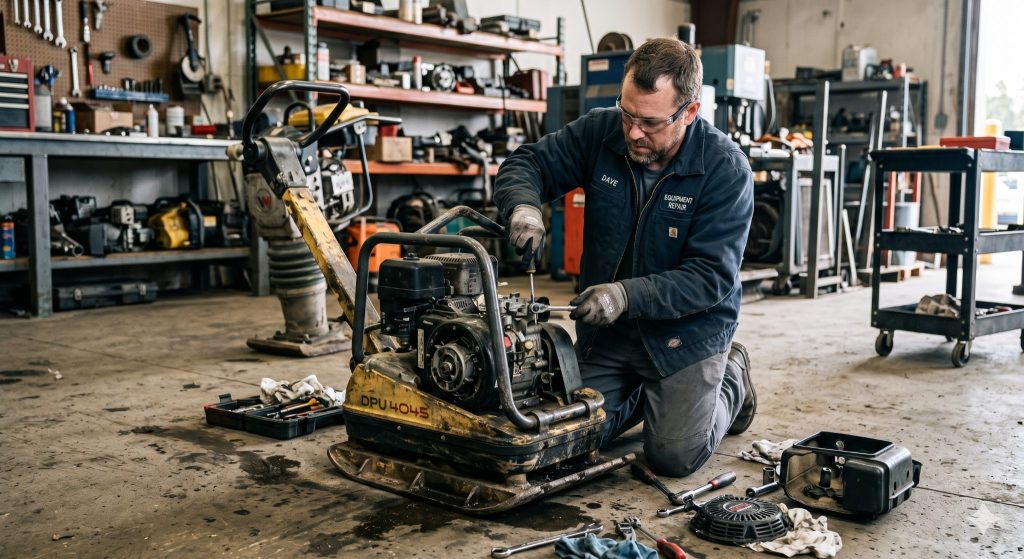
While some problems can be fixed with basic maintenance, others require professional repair.
You should contact a technician if:
- the engine repeatedly fails to start
- the vibration system stops working
- the equipment makes unusual noises
- internal mechanical parts are damaged
- the machine loses compaction power
Professional technicians have the tools and expertise needed to safely diagnose and repair complex equipment problems.
TexPro Equipment has repaired 580+ plate tampers since 2009 across 115+ models. We are a professional repair center who provide warranty service and pick-up/delivery options for your plate tamper. Schedule your repair or regular maintenance now!



Leave a Reply